

Online play is at its best when the game itself, the people around it, and the competitive rhythm all work together. This article explores how community habits, player mindset, and practical routines shape the experience of Playing asoka189 games, whether someone is joining for casual fun, skill-building, or more focused competition. The goal is to help players participate with more confidence, better etiquette, and a healthier approach to winning, losing, and improving. Obtain the Best information about asoka189.
What makes asoka189 games feel competitive and community-driven?
Asoka189 games can feel engaging because they bring together two forces that matter in most online gaming environments: the challenge of play and the energy of other players. Competition gives each session purpose, while community gives it personality. When players can learn from one another, celebrate good moments, and treat each match as part of a larger journey, the experience becomes more than just logging in and playing.
A strong gaming environment is not built only by game mechanics. It is also shaped by how players communicate, how they respond to pressure, and how they make space for newcomers as well as experienced competitors. A player who understands the community side of a platform usually has a smoother experience because they know what to expect, how to ask better questions, and how to handle both fast wins and frustrating losses.
That balance matters. A game can be exciting in short bursts, but community is what often keeps people returning. Players remember useful tips, friendly conversations, close matches, and the feeling of gradual improvement. When competition is matched with respect, the result is a more enjoyable space for everyone involved.
The community layer behind better play
The community around any game acts like an informal learning system. Players observe what others do, compare approaches, and pick up patterns that are hard to learn from rules alone. Even a short conversation after a match can clarify why a particular choice worked, why timing mattered, or why a player lost momentum at a key moment.
For people exploring asoka189 games, the community layer can help reduce the learning curve. Instead of treating every mistake as a dead end, players can see mistakes as signals. A missed opportunity may point to a timing issue. A quick loss may reveal poor preparation. A recurring struggle may indicate that the player needs to focus on a specific skill rather than trying to improve everything at once.
Community also adds accountability. When players are part of a space where others value fair play and positive behavior, they are more likely to manage their reactions and respect the flow of the game. That does not mean every interaction will be perfect, but it does mean the overall tone can become more constructive when enough people participate with care.
Shared routines create familiarity
Players often build small routines without realizing it. They may check updates before playing, warm up with easier rounds, review past mistakes, or join at the same time as friends. These routines create a sense of familiarity, and familiarity lowers friction. Instead of spending energy figuring out what to do each session, players can focus on playing with attention.
For newer players, adopting a simple routine can make the experience less overwhelming. A short warm-up, a quick review of the rules, and a clear idea of how long to play can improve focus. The routine does not need to be complicated. It simply needs to help the player enter the game with intention rather than reacting randomly to everything that happens.
Experienced players benefit from routines too. They may use them to stay consistent, avoid careless decisions, and reset after a difficult round. In competitive spaces, emotional control is often as important as technical skill. A routine gives the player a stable rhythm when the game itself becomes unpredictable.
Community knowledge fills the gaps
Official rules and interface prompts can explain the basics, but communities often explain the practical side. They discuss which habits help beginners, which mistakes appear often, and which approaches work under pressure. This kind of knowledge is valuable because it comes from repeated play, not theory alone.
A helpful community does not need to give perfect answers. It simply needs to encourage better questions. Instead of asking, “How do I always win?” a player might ask, “What should I focus on when I keep losing early?” That shift leads to more useful feedback. It also keeps expectations realistic, which is important in any competitive environment.
Players should still think critically about advice. Not every tip fits every style, and not every confident answer is accurate. The best approach is to test suggestions in practice, keep what works, and avoid blindly copying strategies.
How can players approach competition without losing the fun?
Players can approach competition in a healthier way by treating each session as a chance to make better decisions, not just as a pass-or-fail result. Winning matters because it gives the game energy, but improvement comes from noticing patterns, managing emotions, and learning what is within one’s control. When fun depends only on the final outcome, every loss feels heavier than it needs to be.
Competition becomes more sustainable when players separate effort from ego. A close loss can still be a strong performance. A quick win can still reveal weak habits. A player who learns to review both outcomes honestly will usually develop faster than someone who only celebrates wins and ignores everything else.
This mindset is especially useful when Playing asoka189 games with other people watching, chatting, or competing nearby. Community spaces can amplify emotions. Praise feels better, criticism feels sharper, and pressure can rise quickly. Staying grounded helps players enjoy the social energy without letting it control their choices.
A practical competition mindset
A practical mindset does not remove ambition. It organizes it. Players can still want to win, climb, improve, and be recognized, but those goals work best when they are supported by habits that protect focus.
Useful mindset anchors include:
- Play the current round, not the last one. Carrying frustration forward usually leads to rushed decisions.
- Measure decisions, not only outcomes. Sometimes the right move fails, and sometimes a lucky move succeeds.
- Respect the opponent or other players. Dismissing others makes it harder to learn from them.
- Know when to pause. Fatigue can look like bad luck, but it often leads to preventable mistakes.
- Keep goals specific. “Improve my timing” is more useful than “be better at everything.”
These principles sound simple, but they become powerful through repetition. Competitive players often improve by narrowing their attention. Instead of trying to transform overnight, they choose one habit, practice it across several sessions, and then build from there.
The role of pressure
Pressure is not always negative. It can make a match exciting, sharpen attention, and create memorable moments. The problem begins when pressure turns into panic or when a player feels they must prove something every time they play.
One way to manage pressure is to create clear session boundaries. Decide how long to play, which games to join, and what the session is meant to accomplish. A casual session should not be judged like a serious competitive run. A practice session should not be treated like a final test.
Players can also use short resets. Standing up, breathing slowly, stretching, or stepping away for a few minutes can interrupt frustration before it affects the next round. Good competitors are not emotionless. They are simply better at recovering before emotions take over.
Key habits that make the experience smoother
Small habits often have a larger impact than dramatic changes. A player does not need a perfect system to enjoy asoka189 games more fully. They need a few repeatable actions that improve clarity, reduce confusion, and encourage better decisions.
The following checklist can help players build a stronger foundation:
- Read the rules before joining a new mode. Even familiar-looking games may have unique details.
- Start with lower-pressure sessions. This gives time to understand pacing before entering tougher spaces.
- Watch how experienced players manage timing. Their choices can reveal what matters most under pressure.
- Keep communication respectful. A positive tone makes it easier to ask questions and receive feedback.
- Avoid chasing losses or forcing longer sessions. Continuing only because of frustration usually reduces focus.
- Set a time limit before starting. A planned stopping point supports balance and better decision-making.
- Review one lesson after each session. A single clear takeaway is more useful than a vague feeling of success or failure.
- Protect personal information. Community interaction should never require sharing sensitive details.
- Use platform tools responsibly. Settings, limits, and support features exist to make play more manageable.
- Take breaks when attention drops. Poor concentration can turn enjoyable play into avoidable stress.
These habits are not complicated, but they help create consistency. Consistency is important because online play can shift quickly. New opponents, different formats, changing moods, and unexpected outcomes can all affect performance. Strong habits give players a stable base when everything else is moving.
Competition formats shape player behavior
Different competitive formats create different expectations. A casual room encourages experimentation. A leaderboard setting may push players toward efficiency. A tournament-style event can make patience and preparation more important. Understanding the format helps players choose the right mindset before they begin.
If a player enters a relaxed environment with an overly intense attitude, they may frustrate themselves and others. If they enter a serious competitive space without preparation, they may feel overwhelmed. Matching the approach to the format is one of the simplest ways to improve the experience.
Casual play encourages exploration
Casual play is useful because it allows players to experiment without attaching too much meaning to the outcome. A beginner can test basic mechanics, while a more experienced player can try a new style or strategy. This space is where many players discover what they enjoy most.
Casual does not mean careless. Players should still respect the rules and other participants. However, the purpose is different. Instead of optimizing every move, the player can focus on learning how the game feels, what choices are available, and where personal strengths or weaknesses appear.
This type of play is also good for community building. Conversations tend to be more relaxed, and players may be more willing to share tips. For someone new to asoka189 games, casual spaces can provide a friendlier entry point before moving into more demanding competition.
Competitive play rewards preparation
More competitive formats usually reward players who prepare before they enter. Preparation may include reviewing rules, warming up, understanding common strategies, or setting a clear goal for the session. It may also include emotional preparation, such as deciding in advance not to argue, tilt, or continue past a reasonable limit.
Competitive play can feel intense because each decision seems to matter more. That intensity is part of the appeal, but it also exposes weak habits quickly. A player who guesses constantly, ignores patterns, or reacts emotionally may struggle even if they understand the basics.
The most practical response is not to become rigid. It is to become observant. Competitive players improve by noticing what repeats: where they lose control, when they take unnecessary risks, and which situations produce their best decisions.
Events and challenges create shared momentum
Special events, limited challenges, or community goals can bring players together around a shared experience. These moments often create conversation because many people are trying similar things at the same time. Players compare progress, discuss approaches, and celebrate milestones.
The best way to approach events is with a clear plan. Know what the event requires, how much time it may take, and whether it fits your current interest and schedule. Not every event needs to be completed. A healthy gaming routine leaves room to opt out without feeling left behind.
For community managers, moderators, or group leaders, events can be a chance to model positive behavior. Clear expectations, helpful reminders, and fair discussion rules make shared competition more enjoyable.
Playing asoka189 games with a stronger community mindset
Playing asoka189 games is not only about individual performance. It is also about how a player shows up in a shared environment. A strong community mindset helps players enjoy the social side while avoiding many of the problems that can make online spaces feel tense or unwelcoming.
A community-minded player understands that every message, reaction, and decision contributes to the atmosphere. Encouragement can help a beginner stay engaged. Calm behavior after a loss can prevent conflict. A useful tip can turn confusion into progress.
This does not mean players must become overly social. Some people prefer quiet focus, and that is valid. A community mindset can be as simple as being respectful, following the rules, and not making the space harder for others.
Better communication improves the room
Good communication is clear, brief, and respectful. In fast-paced play, long explanations are not always helpful. A short, specific message often works better than a vague complaint. For example, “I lost track of the timing there” invites learning, while “This is unfair” usually shuts conversation down.
Tone matters because text can be misunderstood. What feels like a joke to one person may sound dismissive to another. Players can avoid many conflicts by assuming less, explaining more carefully, and stepping away from unproductive arguments.
Community communication also includes knowing when not to speak. During tense moments, silence can be useful. Not every mistake needs commentary, and not every loss needs a public reaction. Respectful restraint is part of good gaming etiquette.
Welcoming new players strengthens the ecosystem
New players bring energy into a game community. They ask basic questions, create fresh conversations, and eventually become experienced participants themselves. If their early experience is hostile or confusing, they may leave before they understand what makes the games enjoyable.
Welcoming newcomers does not require experienced players to provide constant coaching. Simple actions help: answering one question clearly, pointing someone toward the rules, or explaining a common mistake without sarcasm. These small gestures can make the difference between a player feeling embarrassed and a player feeling motivated.
A community that supports learning tends to stay healthier over time. It creates a path from beginner to regular participant. That path is important because every experienced player was once new too.
Responsible play belongs in every competitive conversation
Any discussion about competition should include balance. Games are designed to be engaging, and competitive settings can make players want to continue longer than planned. Responsible play means staying aware of time, mood, and personal limits before the session becomes unhealthy or unproductive.
If any game format involves purchases, rewards, or financial risk, players should treat that part with extra caution. Set a budget in advance, never gamble with money needed for essentials, and avoid making decisions when angry, tired, or under pressure. Entertainment should remain within limits that make sense for the individual.
Responsible play is not only about avoiding harm. It also improves enjoyment. A player who knows when to stop can return later with a clearer mind. A player who sets limits can focus on the experience instead of worrying about overcommitting.
Warning signs that a break may be needed
Players should consider stepping away when the session starts, as they may feel driven by frustration rather than enjoyment. This can happen gradually. A person may begin with a clear plan, then continue because they want to recover a loss, prove a point, or chase the feeling of one better round.
Common signs include:
- Playing longer than intended on a regular basis.
- Feeling irritated by normal outcomes or minor mistakes.
- Ignoring responsibilities, sleep, meals, or social plans to keep playing.
- Increasing risk or intensity because previous results were disappointing.
- Hiding play activity from people close to you.
- Feeling unable to stop, even after deciding to.
- Treating the next round as the only way to feel better.
Noticing one difficult session does not mean someone has a serious problem, but repeated patterns deserve attention. Taking a break, using available limit tools, or speaking with a trusted person can help restore perspective.
Balance supports long-term enjoyment
A balanced player is more likely to enjoy games over time. Balance protects energy, decision-making, and the sense of fun that originally brought the player in. It also helps keep competition in its proper place: important during the session, but not more important than the rest of life.
Players can create balance by deciding on session length, choosing specific days to play, and keeping other hobbies active. It also helps to end on schedule, not only after a win. Stopping because the plan says to stop builds self-trust.
The strongest gaming routine is one that remains enjoyable tomorrow, next week, and beyond. That requires boundaries as much as enthusiasm.
What should new players pay attention to before joining in?
New players should pay attention to the rules, the pace of play, the community’s tone, and their own limits before jumping into deeper competition. A little preparation can prevent confusion and make early sessions more enjoyable. The aim is not to master everything immediately, but to understand enough to participate with confidence.
The first step is to learn the basics without rushing. New players often feel pressure to catch up quickly, especially when others seem experienced. However, most improvement comes from repeated exposure. It is better to learn steadily than to copy advanced behavior without understanding why it works.
The second step is to observe. Watching how others handle the game can reveal pacing, common mistakes, and community expectations. Observation is not passive. It gives the player context before they make decisions under pressure.
A simple starter plan
New players can use the following plan to make their first sessions more manageable:
- Review the rules and available modes. Know what you are entering before you begin.
- Start with a low-pressure option. Give yourself room to learn the interface and pacing.
- Set a short session limit. Early play can be mentally demanding, so avoid marathon sessions.
- Focus on one skill at a time. Choose timing, decision-making, communication, or rule familiarity.
- Ask specific questions. “What did I miss in that round?” is easier to answer than “How do I get good?”
- Write down one takeaway. A small note after each session builds a personal learning record.
- Pause before moving into higher competition. Confidence should come from understanding, not impulse.
This kind of plan keeps expectations realistic. A new player does not need to perform like a veteran. They need to build enough comfort to learn from each session.
Common beginner mistakes to avoid
Many beginner mistakes come from rushing. Players may skip the rules, enter competitive spaces too early, or assume that a single strategy will work everywhere. They may also overreact to early outcomes, treating a win as proof of mastery or a loss as proof they are not suited for the game.
A better approach is to stay curious. If something goes wrong, ask what information was missing. If something goes well, ask whether it can be repeated. This turns each result into feedback rather than judgment.
Beginners should also be careful with community advice that sounds too absolute. Good players often adjust based on context. If someone says there is only one correct way to play, test that claim before accepting it.
The value of fair play and trust
Fair play is the foundation of any lasting gaming community. Without trust, competition feels hollow. Players need to believe that rules matter, that outcomes are respected, and that the environment discourages manipulation or abusive behavior.
For players, fair play begins with personal conduct. Follow the rules, avoid exploiting unclear situations, and report serious issues through proper channels rather than escalating conflict in public spaces. A fair player does not need to be perfect. They need to act in good faith and respect the shared experience.
Trust also grows when communities encourage transparency. Clear expectations, visible rules, and consistent moderation can reduce confusion. When players know what behavior is acceptable, they are more likely to participate confidently.
Respectful rivalry makes competition better
Rivalry can be one of the most enjoyable parts of gaming. Familiar opponents, close matches, and repeated challenges can create memorable stories. The key is keeping rivalry respectful.
Respectful rivalry means trying to win without demeaning the other person. It means recognizing a strong play, even when it works against you. It also means understanding that the opponent is part of what makes the competition meaningful.
When rivalry becomes personal hostility, the game loses something. The focus shifts from skill and strategy to ego and conflict. Players who can compete intensely while staying respectful help set a better standard for everyone around them.
Moderation and player responsibility work together
A healthy community is not created by moderators alone. Rules and enforcement matter, but everyday player behavior matters too. The most effective environments combine clear platform standards with a player base that values those standards.
Players can support this by not rewarding toxic behavior with attention. They can disengage from baiting, use report tools where appropriate, and encourage better communication when it is safe to do so. Small choices add up.
Community culture is shaped by repetition. If respectful behavior is common, it becomes expected. If negative behavior goes unchecked, it can spread. Every player has some influence, even if it seems small in the moment.
Skill development happens in layers
Improving at competitive games usually happens in layers. A player first learns the rules, then how the game flows, then how to make better decisions under pressure. Later, they may refine timing, prediction, adaptation, and emotional control.
This layered development is important because players often become frustrated when they expect advanced results too early. They compare themselves to people who have spent much more time learning the environment. A better comparison is personal progress: what is clearer now than it was last week?
Skill growth also depends on honest review. Players who blame every result on luck, opponents, or the platform may miss useful lessons. At the same time, players should not blame themselves for everything. The practical middle ground is to ask, “What part of this was within my control?”
Observation builds pattern recognition
Pattern recognition is one of the most valuable skills in gaming. It helps players anticipate what might happen next and respond more calmly. Patterns may appear in opponent behavior, game pacing, risk moments, or personal mistakes.
Players can improve pattern recognition by slowing down their review process. After a session, reflect on recurring situations. Did losses happen at a particular stage? Did strong decisions come after patient observation? Did communication improve or distract from performance?
The more a player notices patterns, the less random the experience feels. Not everything becomes predictable, but more of the game becomes understandable.
Adaptability separates steady players from stuck players
A player can understand the basics and still struggle if they cannot adapt. Competitive environments change. Opponents behave differently. Community trends shift. Strategies that worked before may become less effective.
Adaptability begins with humility. If a familiar approach stops working, the answer may not be to push harder. It may be to observe, adjust, and test something new. Flexible players are willing to update their habits without feeling that every change is a personal failure.
This is where community insight can be especially helpful. Other players may notice shifts earlier or explain why a familiar tactic is losing impact. The goal is not to follow every trend, but to stay open enough to learn.
Social motivation keeps players engaged
People often return to games because of how they feel in the community. A good match is enjoyable, but a good match shared with others becomes a memory. Social motivation can come from friends, rivals, group goals, or simply the comfort of a familiar space.
This social layer can be positive when it encourages learning and connection. It can also become stressful if players feel constant pressure to keep up, perform, or be available. The healthiest communities leave room for different levels of involvement.
Players should choose the kind of participation that fits them. Some enjoy active chat, group events, and frequent competition. Others prefer quiet sessions and occasional discussion. Both approaches can belong in the same ecosystem when respect is present.
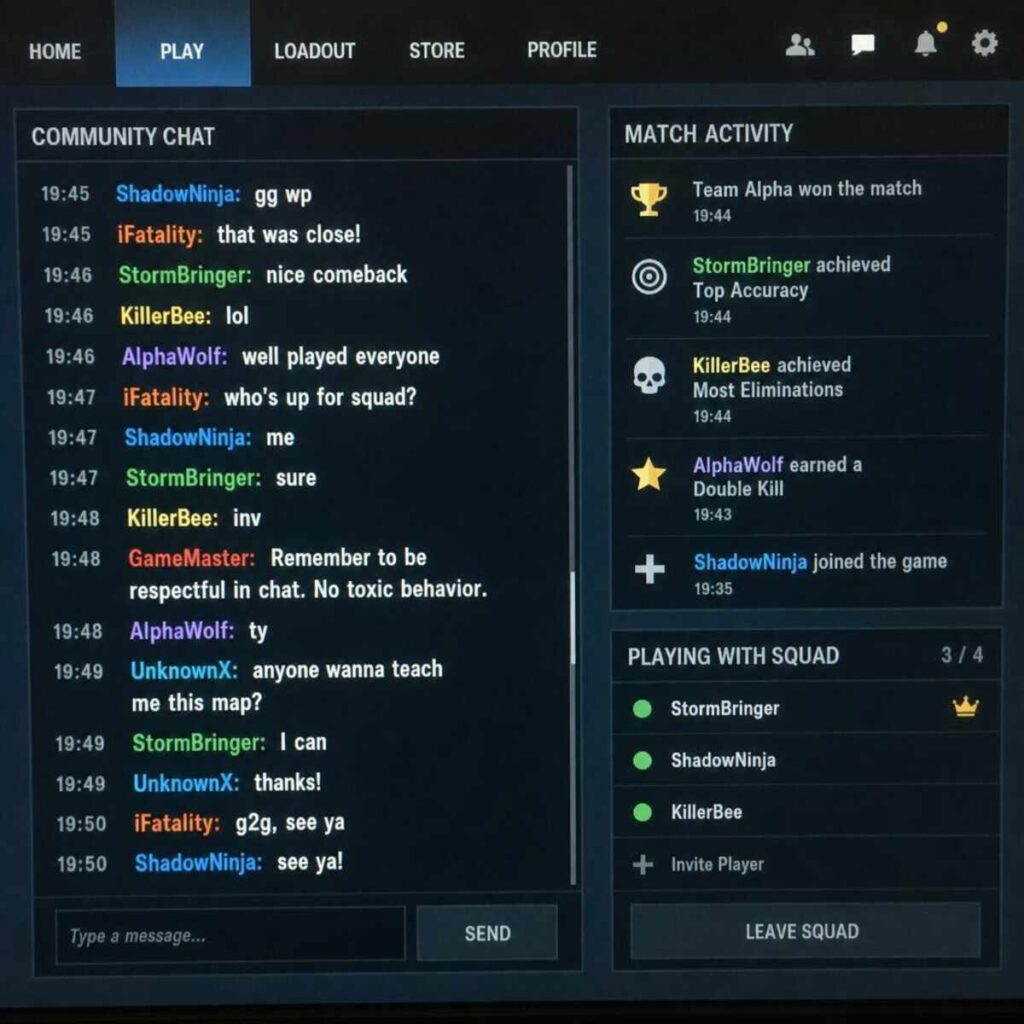
Group play adds accountability and fun
Playing with others can make sessions more enjoyable by adding shared reactions and mutual support. Friends can explain rules, notice mistakes, and celebrate progress. A group can also make it easier to stick to planned session limits when everyone agrees on the rhythm.
However, group play works best with clear expectations. If one person wants casual fun and another wants serious competition, tension can appear. A quick conversation before starting can prevent this. Decide whether the session is for practice, relaxed play, or focused competition.
Good groups also respect breaks. No one should feel pressured to continue when tired, frustrated, or busy. The best gaming relationships make the experience better without making it feel like an obligation.
Recognition should support growth, not replace it
Recognition can motivate players. A compliment, a leaderboard position, or a strong reputation in the community can feel rewarding. But recognition becomes unhealthy when it becomes the only reason to play.
Players who depend too much on approval may avoid experimenting for fear of looking inexperienced. They may also react strongly to criticism or losses. This can slow improvement, because growth requires trying things that may not work immediately.
A healthier approach is to enjoy recognition while staying focused on learning. Praise is pleasant, but it is not the foundation. The foundation is steady participation, honest review, and respect for the game.
Practical etiquette for stronger sessions
Etiquette is not about being formal. It is about making shared play easier. Good etiquette reduces unnecessary conflict, keeps communication useful, and helps players focus on the game itself.
In competitive spaces, etiquette can be the difference between a close match feeling exciting and one feeling unpleasant. Players do not need to agree on everything, but they should understand the basic behaviors that keep a room functional.
Practical etiquette includes:
- Greet people simply when entering social spaces. A small friendly tone can set the mood.
- Avoid spamming messages. Too much noise can distract players and bury useful communication.
- Do not mock beginner mistakes. Everyone learns faster in an environment where questions are safe.
- Give advice only when it is welcome. Unasked coaching can feel condescending.
- Accept outcomes gracefully. Winning and losing are both part of competition.
- Use support or report tools for serious issues. Public arguments rarely solve platform problems.
- Respect different play styles. Not every player has the same goal or level of experience.
- Leave room for others to speak. A community is stronger when more voices can participate.
Etiquette becomes especially important when emotions rise. A player may not control every outcome, but they can control how they respond. That response influences not only personal reputation but also the quality of the surrounding community.
Turning sessions into learning loops
A learning loop is a simple process: play, notice, adjust, and repeat. This approach helps players improve without turning every session into a heavy analysis exercise. It keeps learning practical and connected to real experience.
The mistake many players make is playing repeatedly without reflection. They may spend many hours in the game but continue making the same decisions. A learning loop prevents that by adding a small review step.
A useful loop might look like this:
- Choose a focus before playing. For example, timing, patience, communication, or rule clarity.
- Play a limited session. Keep the session long enough to learn but short enough to stay focused.
- Identify one repeated pattern. Look for something that happened more than once.
- Make one adjustment. Do not try to fix everything at the same time.
- Test the adjustment next session. Improvement comes from repeated practice, not one-time insight.
This process works because it makes growth manageable. Players are less likely to feel overwhelmed when improvement is broken into small pieces. Over time, those small pieces form stronger instincts.
Notes can reveal progress
Keeping brief notes may sound unnecessary, but it can be surprisingly helpful. A player might write down what felt confusing, what worked, and what to try next. These notes do not need to be detailed. A few lines after a session can reveal progress that would otherwise be forgotten.
Notes are also useful during frustrating periods. When a player feels stuck, looking back can show that improvement has happened, even if recent results feel uneven. Progress in games is rarely perfectly smooth. Notes provide a more balanced view.
For players who enjoy community discussion, notes can make questions better. Instead of asking for general help, they can describe a specific pattern. Specific questions usually receive better answers.
Choosing the right pace for your goals
Not every player wants the same thing from asoka189 games. Some want quick entertainment after a busy day. Some enjoy the social atmosphere. Others want to test themselves competitively and improve over time. The right pace depends on the goal.
A casual player does not need to follow the same routine as a competitive player. A competitive player should not expect every casual participant to share their intensity. Problems often happen when players assume their own goal is the default for everyone else.
Understanding your goal before a session helps you choose the right environment and attitude. If the goal is relaxation, avoid settings that create unnecessary pressure. If the goal is improvement, choose formats that provide useful challenge. If the goal is social connection, focus on spaces where communication is positive and active.
Goal-setting examples
Players can keep goals simple and realistic. Strong goals are specific enough to guide behavior but flexible enough to adapt to the session.
Examples include:
- “I will play for thirty minutes and focus on learning the pacing.”
- “I will ask one clear question if I get confused.”
- “I will practice staying calm after a mistake.”
- “I will try one new approach and see how it feels.”
- “I will stop after my planned session, regardless of the outcome.”
- “I will review one decision instead of judging the whole session.”
These goals work because they focus on actions the player can control. Results still matter, but they are not the only measure of value.
A stronger community benefits every kind of player
A strong community helps beginners, casual players, competitive players, and returning players in different ways. Beginners gain guidance. Casual players gain a more enjoyable atmosphere. Competitive players gain better rivals and clearer expectations. Returning players find it easier to reconnect when the environment feels organized and welcoming.
The quality of a gaming community is not fixed. It changes based on how people behave every day. If players reward helpfulness, practice good etiquette, and keep competition respectful, the environment becomes more appealing. If they normalize hostility, confusion, or pressure, the experience becomes harder to enjoy.
This is why individual behavior matters even in large spaces. One player cannot control the entire community, but they can influence the tone of their own interactions. Over time, many small positive choices can shape a better culture.
The best competitive spaces feel challenging and safe
A strong competitive space should challenge players without making them feel unwelcome. Challenge creates excitement. Safety creates trust. Both are necessary for long-term engagement.
A space that is only easy may become boring. A space that is only intense may become exhausting. The best environments allow players to test themselves while still knowing that rules, etiquette, and basic respect matter.
Players contribute to that balance by competing seriously without becoming hostile. They can care about the result while still caring about the experience. That combination is what makes competition worth returning to.
Final takeaway
Asoka189 games can offer more than isolated rounds of play when players approach them with the right mix of curiosity, discipline, and community awareness. The most rewarding experience often comes from balancing competition with respect, learning from both wins and losses, and choosing a pace that fits personal goals.
For new players, the best starting point is simple: learn the rules, begin in lower-pressure spaces, and pay attention to the community tone. For experienced players, the opportunity is to keep improving while helping maintain a fair and welcoming environment. When players treat competition as a shared experience rather than only a personal result, every session has more room for skill, connection, and lasting enjoyment.